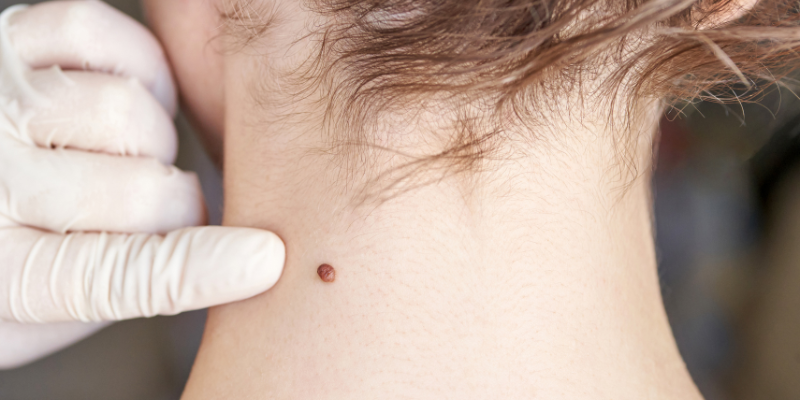
Biopsy or Removal of Mole or Skin Lesion
A referral from your family doctor or a walk-in clinic is required before Dr. Fisher will see you for a skin biopsy or lesion removal.
A skin biopsy is a procedure where a sample of skin is removed to be assessed for cancer or to diagnose other skin conditions. Lesion removal is a procedure where a specific lesion, for example a mole or skin tag is entirely removed. Lesions that are removed can also be assessed for skin cancer if they look irregular or suspicious.
Biopsies and lesion removal starts with local freezing being injected into the area. Skin biopsies can be done by several methods. The most common is a punch biopsy where a small instrument that looks like a cookie cutter is used to remove a piece of skin. Stitches may or may not be needed to close the wound, depending on the size of the punch biopsy. Lesion removal can be done by cutting it out with a surgical blade and then placing stitches to close the wound. Certain lesions can also be removed by freezing (cryotherapy) or cautery.
The most common lesions for biopsy or removal are moles. These may be benign (noncancerous), malignant (cancer) or suspicious. Other things that can be treated include skin tags, seborrheic keratosis, ac nic keratosis and sebaceous hyperplasia.
The consultation for removal or biopsy is covered under MSP with a referral from your family doctor or a doctor at a walk-in clinic. Biopsy or removal of suspicious moles or skin cancers are covered under MSP. Biopsies done to determine a medical diagnosis are also covered under MSP. Skin lesions that are removed for cosmetic reasons are not covered under MSP.
There is minimal discomfort with skin biopsies and lesion removals because local anaesthetic is injected prior to the procedure. There is a small amount of pain with the injection of local freezing. Procedures involving cryotherapy (freezing) can cause a small amount of pain.
As in any procedure there are certain risks including bleeding, pain, redness, swelling, infection, incomplete tumor removal, prolonged wound healing, pigmentary changes, and reactions to sutures, anesthetics or topical antibiotics. Although all reasonable efforts are made to minimize the possibility of these potential complications, many factors such as the degree of sun damage or patient compliance with post-operative instructions affect ultimate healing. Very superficial wounds such as shaves may heal with only a subtle change in skin color. All other deeper wounds rely on the formation of scar tissue for proper healing. Although a scar is often inevitable, every effort is made to minimize its functional and cosmetic impact.
Surgery under local anesthetic requires minimal preparation. You do not need to fast, and you are legally able to drive home after the procedure. You should shower as normal prior to your procedure and ensure the area in question is clean and free of make-up and moisturisers. Wear loose and comfortable clothing and slip-on shoes. You should continue all normal prescribed medication. To further reduce the chances of bleeding and complications, avoid alcohol for three days before and three days after your surgery. If you require pain medication, take Tylenol. It is recommended that you do not take any non-essential blood thinning medications (ASA, aspirin, ibuprofen), supplements (fish oil, Vitamin E) or herbal remedies (garlic, ginkgo, dong quai, ginger, turmeric) for 1 week before skin biopsy or lesion removal. If you are required to be on any blood thinners for medical reasons you can still undergo treatment but will be at an increased risk of bruising.
There may be a dressing applied to your skin. Please keep the dressing dry and intact. You may remove it after three days. You may shower daily. Always clean the area with water only. Avoid using soaps, creams, ointments, antiseptics (e.g. Betadine) as these might cause wound breakdown and delay healing. Never leave a wet dressing on a wound. If the initial surface dressing gets wet, it must be changed. Dry dressings minimize the risk of infection. Avoid high impact exercise and excessive heat (hot tubs, saunas) for 48 hours to minimize swelling and bruising. You may use cold compresses or take arnica if you experience swelling and bruising. Makeup may be used on the area after 24 hours. It is important to contact Dr. Fisher if you have any concerns.